Why did you want to write a book about the value of care work?
I was diagnosed with an autoimmune disease some years ago. In the hospital, I encountered an incredibly complex and dynamic field of work dominated mostly by women. A year later, the Danish Finance Ministry concluded that women were a deficit to the economy, because they created less value than men. I had been struck by the value of care work.

The ministry’s calculation showed that behind the politics there was an invisible language where care work was treated as valueless. They deserved to know and be able to criticize it. The conversation often frames care workers as lazy and greedy. While care workers struggle with the demands to be more effective in their work, the blame for the situation is often put on them. I wanted to show that care workers are victims of political decisions. When it feels like there is less time, fewer resources, and less autonomy over your work, it is because that is actually happening. I’m happy that my book is now used as part of education in care work in Denmark.
How are care workers doing?
My book has come out all over Europe, and it’s the same story everywhere. People are saying that they love their job, they love their patients, but they simply cannot work under these conditions. It is not just about the pay. What I’m hearing from care workers is a deep sadness about not being able to perform the care you want and give the best you can. Most of the people I meet say that it’s the best job in the world. But every job you do sucks if you don’t have the resources.
How was your book received by economists?
In the beginning, a lot of economists were very angry about the book. They are used to no one criticising them or their methods. I was also questioned about whether I could understand economics. Pointedly, no one asked if I could understand care work. The message was that anyone could write about care work, whereas economics was only for geniuses. I think it was a shock to many economists how important this book became to people, because to them, there really was no other way of thinking about value than their own.

The question of care really brings people together. The popularity of the book shows that it’s often not a new car or a kitchen that people really want. What is important to them is that their child can attend a nice school, that their elderly mother is in a good care home, and that there are enough adults working in the children’s daycare. These are the things that really matter to people. People want their loved ones to receive good care. The problem is that we really don’t have a language for this want in politics or economics. Bureaucracy is trying to make care speak a numbers language, but we know care can’t be written in numbers. A spreadsheet can’t show what it means to sit with a person who has terminal cancer.
What are the biggest problems in care work?
The lack of resources in care work is a form of exploitation. Businesses in Finland are getting care workers very cheaply now, compared to how important they are. Keeping them feeling like they are less and like their voices don’t matter is a very important strategy in the economic system. Instead of talking about running out of money, we should consider what it means to run out of care.

I would like caring for people to be seen as a type of intelligence and a skill. A CEO who is “good with people” could never handle a care worker’s 12-hour shift where people need them constantly. Yet the latter is considered a personality type and only the former is considered a skilled person. It is a cultural question to see a CEO as a more important person than a care worker.
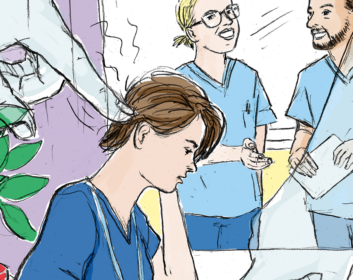
We have systematised care work so that it is almost factory-like. Care has come a long way from what it feels like to be with people, to stand with them and take care of them. The real core of care work is impossible to quantify and that renders it invisible and meaningless in political processes. There is a huge gap between how we describe this work in bureaucracy and how it is. It becomes the nurse’s job to build a bridge between these two systems, which is impossible and results in them doing more than they were hired to do, doing more than they have time to do, constantly falling behind. That is a very tiring place to do care from, as care actually needs space and flexibility. To do good care work, one needs more than the minimum.
What would be the first change care work needs?
Care workers need more self-determination over their working time. They feel very supervised. We need to place more trust in the care workers and create more flexibility. This means removing mistrust and having faith in both the care worker and the patient: that they want what is best for each other, that they are on the same team.
Today we are in an absurd situation where sometimes nurses work against patients because of time and resources. Autonomy would give us better care workers. They would be able to build relationships with patients, know the people, understand their context and where they come from. Those extra minutes a relationship would take can save five hours in the long run because you understand who they are. And it also makes care work more fun and engaging.

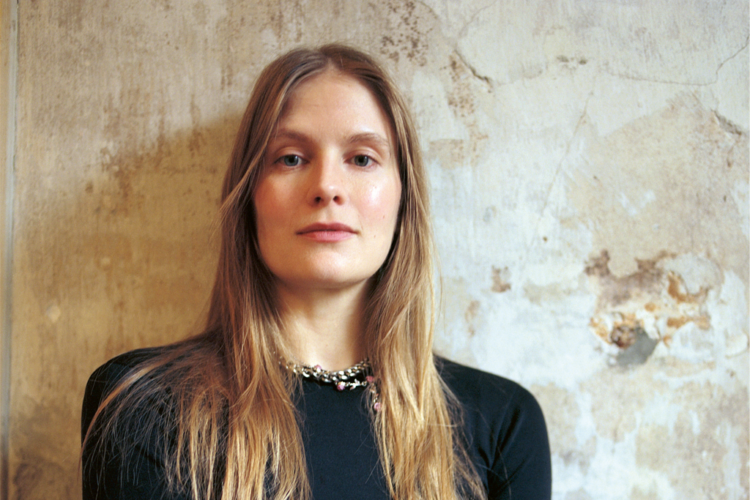
Emma Holten
Danish writer, activist and researcher.
Her book Deficit, the Hidden Value of Care has sold over 55 000 copies in Denmark.
Recommended reads:
Miksi hoivaa ei suomalaisessa yhteiskunnassa osata arvostaa?
Hoiva-ala vaatii ammattitaitoa: ”emme ole vain pyllynpesijöitä”
Saynur Soramies: ”Puhumme naisten oikeuksista, mutta hyväksikäytämme filippiiniläisiä hoitajia”